General Information
Behavoir And Ecolgy In The Wild
Habitat
Diet

The African Grey Parrot, Psittacus erithacus or Kasuku

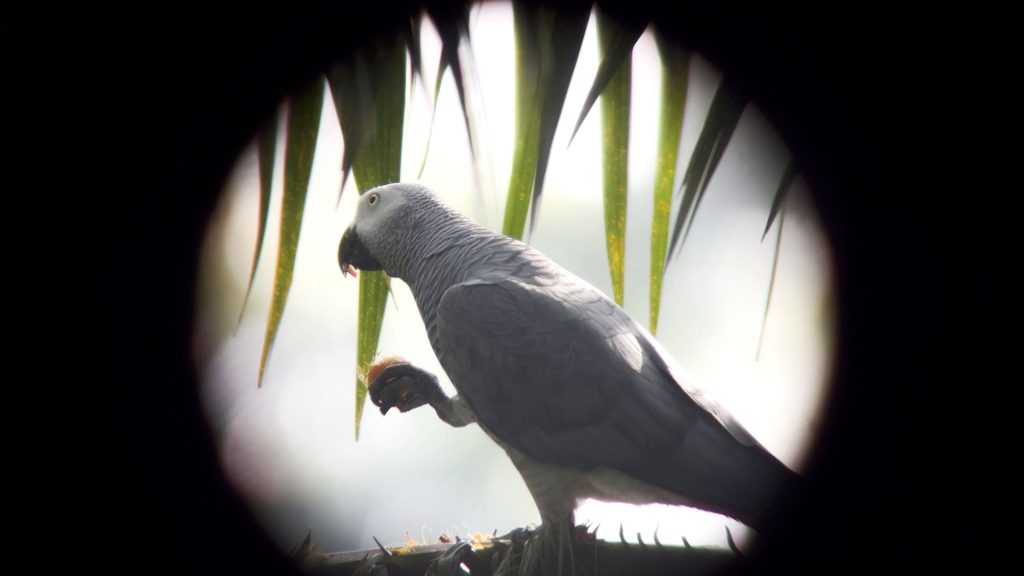
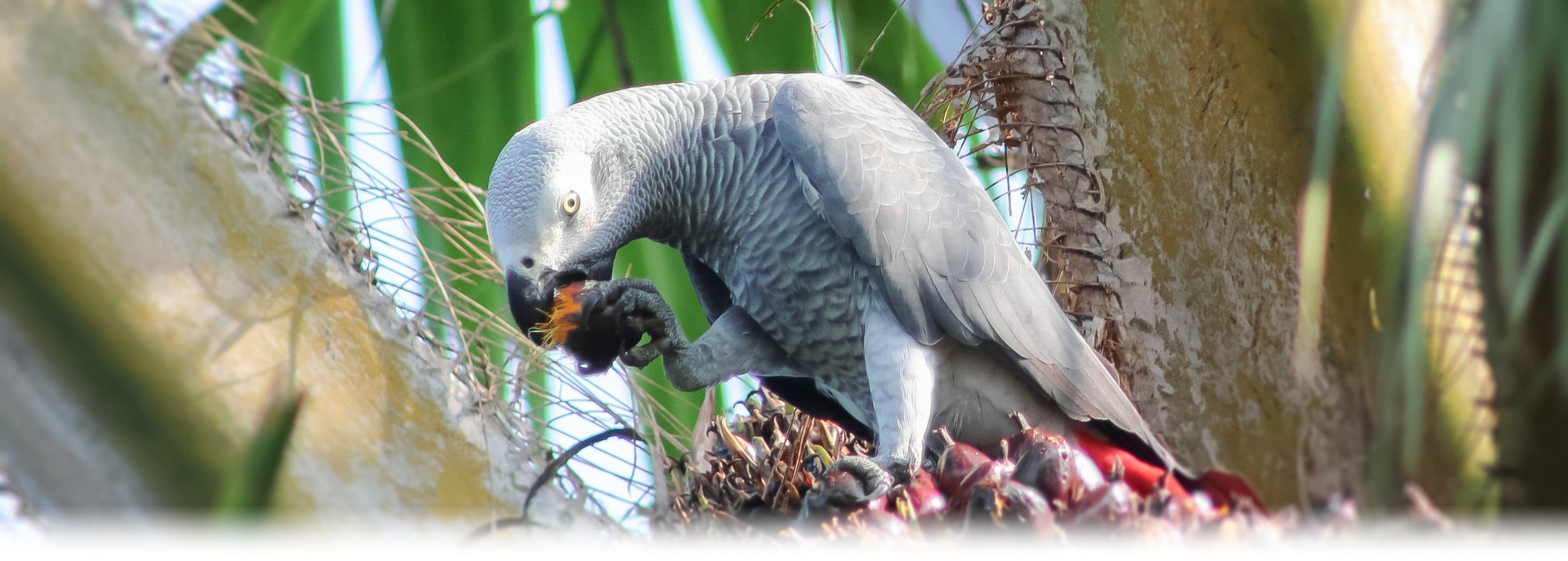
The African Grey Parrot is a large, broad-winged parrot with a short, square-ended scarlet red tail, creamy-yellow eyes, with whitish sides to the face, and scaly paler dove-grey fringes to the head and neck. The plumage of both sexes are alike. The immature bird is similar to an adult but has a darker tail and grey eyes. Pairs or small parties are locally common in suitable forests from 700 – 2,300 m elevation in Uganda, but are now very scarce elsewhere in East Africa. Their voice in flight and perched gives a great variety of loud slurs and raucous notes, some of them explosive. 

African greys bond as pairs at the age of five to seven years. They live and stay together for many years and some remain together for life. Their breeding season mostly occurs in the rains. The average lifespan in the wild is estimated to be 45 years.

Intelligence

According to Dr. Irene Pepperberg, who has been researching the cognitive abilities of grey parrots in the laboratory, grey parrots have the intelligence of a five-year-old child. Her famous collaborator, the grey parrot Alex, could use more than 100 human words, he could tell the colours, shapes and materials of objects, and categorize them. He would even create new words like “banarry” – a combination of banana and cherry – which he used for apple. 

You can observe many more behaviours in the wild that show how intelligent grey parrots are. Here are some examples:


Individuals or pairs come to check on the feeding tree at the perfect time when the tree has fruits, buds or flowers.

Before parrots land in a tree for feeding, they first fly around scanning for any security threats, such as eagles or humans.

Grey parrots mimic the calls of common birds in their surroundings, such as the lizard buzzard, the red-chested cuckoo and the western black headed oriole, and in cities, they sometimes mimic the horns and sounds of vehicles.

Greys will keep quiet when they hear others in flight when there is a shortage of food, but if food is abundant, they will then reply to the calls of their friends flying by.

The cleaning of hands and mouth after food is essential for good health. Grey parrots rub their bills on branches to clean them after feeding.

Endangered Species

Grey parrots are a highly endangered species listed under Appendix 1 by CITES. Their populations have declined tremendously in the last few decades, in some places up to 99 %. The trade in grey parrots living in the wild has been prohibited since 2016. Nevertheless, the main threats to these birds are the still ongoing illegal pet trade and habitat loss. 

Relationships with Other species in the Wild

The African harrier-hawk, lizard buzzard and palm-nut vulture tend to be competitors of the grey parrots, feeding on oil palm trees. It is like a movie watching them puffing out their feathers, making scaring calls and loud noises whenever greys meet these birds in a tree.

Viellots’ black weavers, grey-headed nigritas and common bulbuls are friendly users of the same tree, feeding mostly on what is left after the parrots have fed.

The red-legged sun squirrel causes a little threat to the grey parrots feeding in the same tree, however, greys, of course, manage to chase the squirrels away.

A typical day in the Life of a Grey Parrot 


A grey parrot’s day is determined by the weather; on a good day, parrots wake up from the roost and link up with others to determine their flyways and where to find food. They fly in pairs/flocks to the feeding sites, mostly in the community. They feed in the morning and have a little rest in the afternoon as they wait for the evening to have their last meals before flying back to the forest for the night.

Sounds of the Grey Parrot

Grey parrots communicating before feeding while perched in the higher tree canopy

Grey parrots communicating before feeding while perched in the higher tree canopy

Kahonda village, first time hearing Greys call in this village

Two Greys recorded in the park, calling higher in tree canopy early mornings

Nick trying to mimic Grey parrots in the wild, as they reply back

Grey parrots in the wild can also mimic human beings

Grey parrots communicating before feeding while perched in the higher tree canopy

Where to Stay

Within our area, grey parrots stay mainly in Kibale National Park as their sole home. Kibale National Park was gazetted in 1993. It covers an area of approximately 795 km2 and is located 20 km east of Fortportal Town. The park is surrounded by community land, cultivated under subsistence farming, as well as extensive areas of tea estate. 

The Grey Parrot (Psittacus erithacus) is a widely distributed species in equatorial Africa. Here’s an overview of their population and habitats:

Range and Distribution: Grey Parrots are found in:

1. Central Africa: Cameroon, Central African Republic, Democratic Republic of Congo, Republic of Congo
2. West Africa: Côte d’Ivoire, Ghana, Liberia, Nigeria
3. East Africa: Kenya, Tanzania, Uganda

Population Density: High-density populations are found in:

1. Congo Basin
2. Nigerian rainforests
3. Cameroon’s tropical forests

Habitat: Grey Parrots inhabit:

1. Tropical rainforests
2. Moist savannas
3. Woodland edges
4. Gallery forests

Regional Breakdown: Here’s a brief overview of Grey Parrot populations in specific regions:

1. Congo Basin: Largest population, with estimates suggesting 100,000-500,000 individuals.
2. Nigeria: Significant population, with 10,000-50,000 individuals.
3. Cameroon: Estimated 5,000-20,000 individuals.
4. East Africa: Smaller, fragmented populations.
The parrots prefer to roost in open forested patches, both inside and outside the protected areas. There have been no reported cases of habitat loss in our area since we started monitoring grey parrots, because Kibale Forest, their main habitat, is under state protection and the feeding trees in the community are protected by the Parrot Tree Caretakers Association.

What to Eat

There are over 28 different tree species that have been recorded to be fed on by grey parrots in the wild and around Kibale National Park. Their favourite feeding spots are both inside the park and outside in the community. They will feed mostly on flowers, fruits and buds, and will very occasionally feed on the bark of dead trees and leaves.

The grey parrot’s favourite tree species in the wild are the oil palm tree, Erythrina excelsa, Zanthoxylum gilleti, Maesopsis eminii, Blighia unijugata and the African tulip tree. 

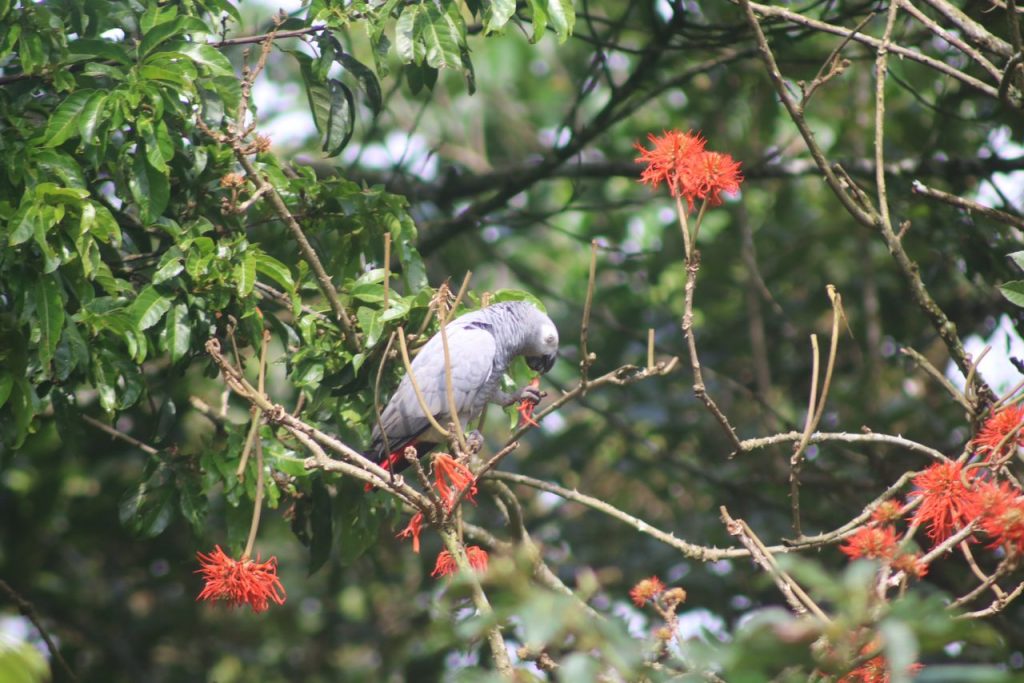
Tulip trees (Spathodea campanulata) bear red flowers and buds that are grey’s favourites, especially during the dry seasons, when parrots will open the buds using their bills to drink water from them.

Diet (Plants / Trees)

Erythrina Excelsa
Blighia Unijugata
Aninjeria altisma
Pseudospondias Microcarpa
Aninjeria altisma
Erythrina abyssica
Elaeis Guineensis (Oil Palm tree)
Spathodea campanulata